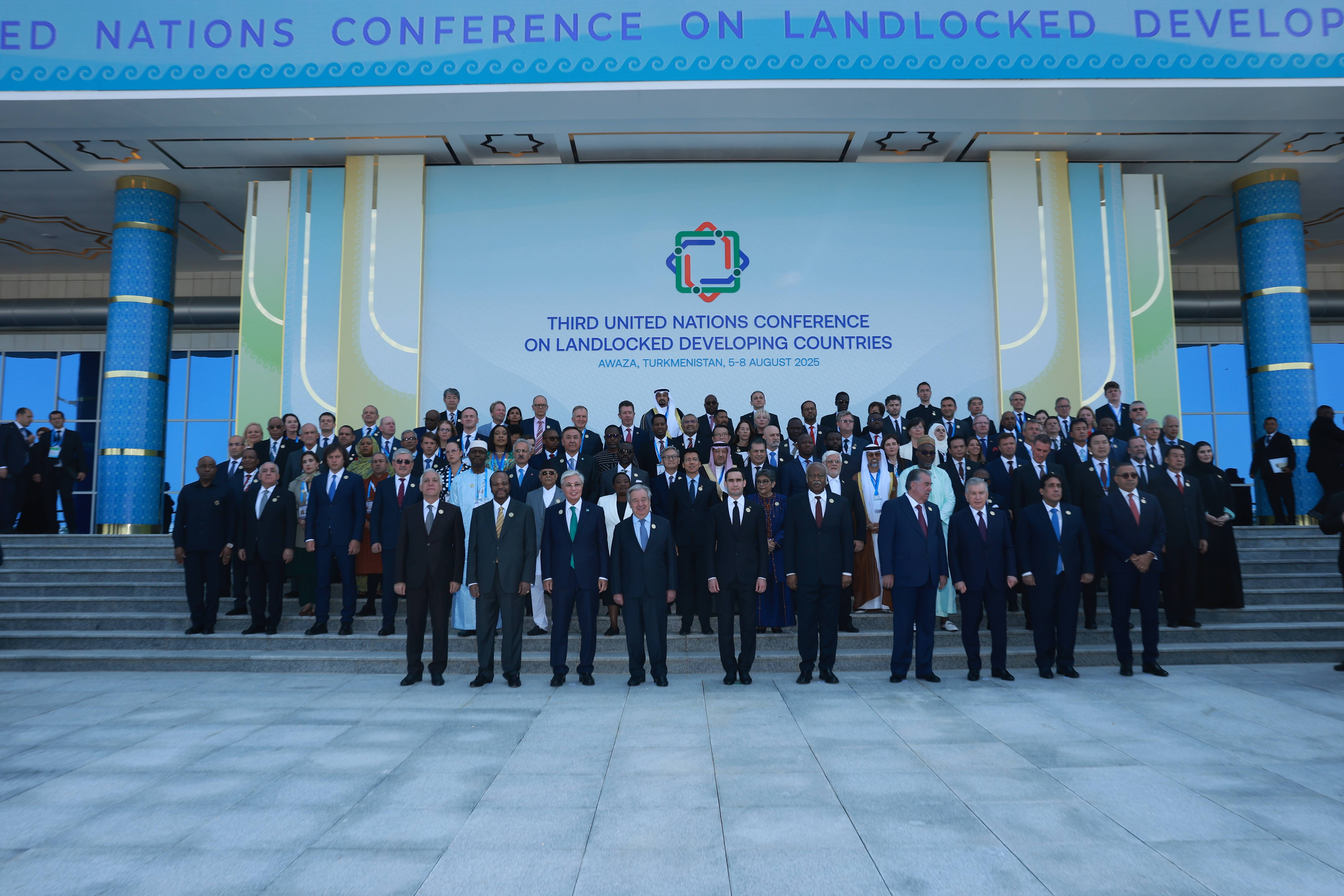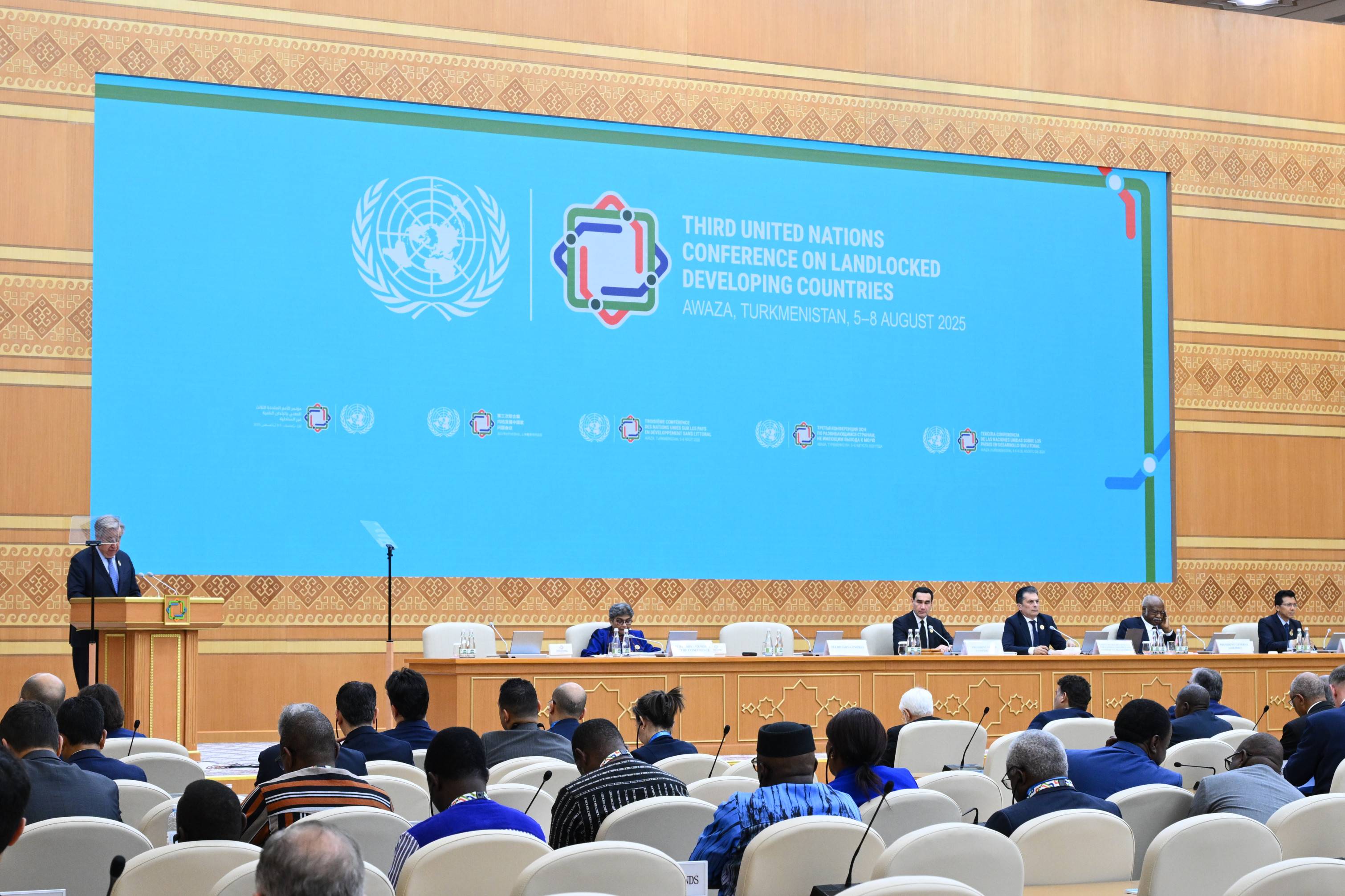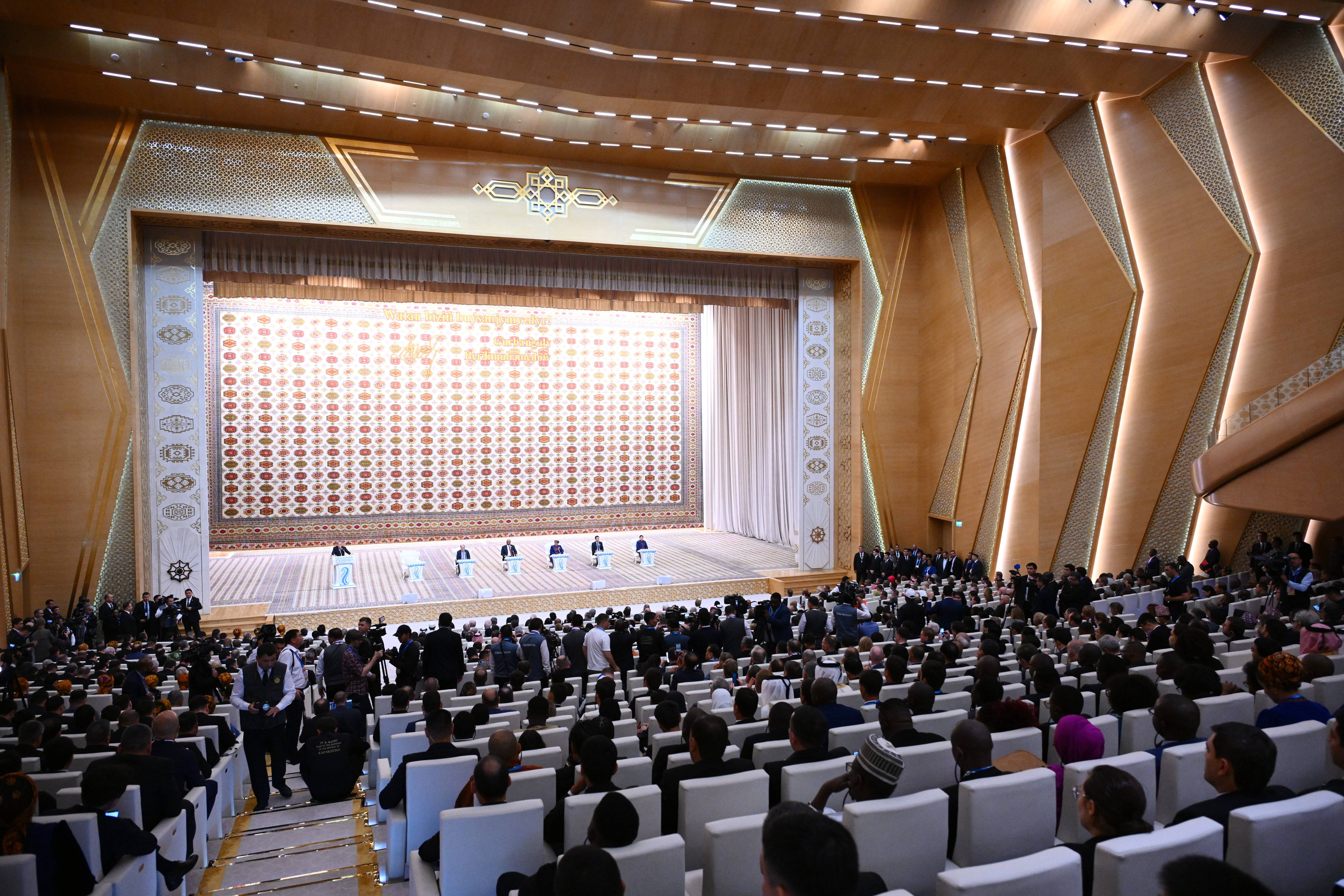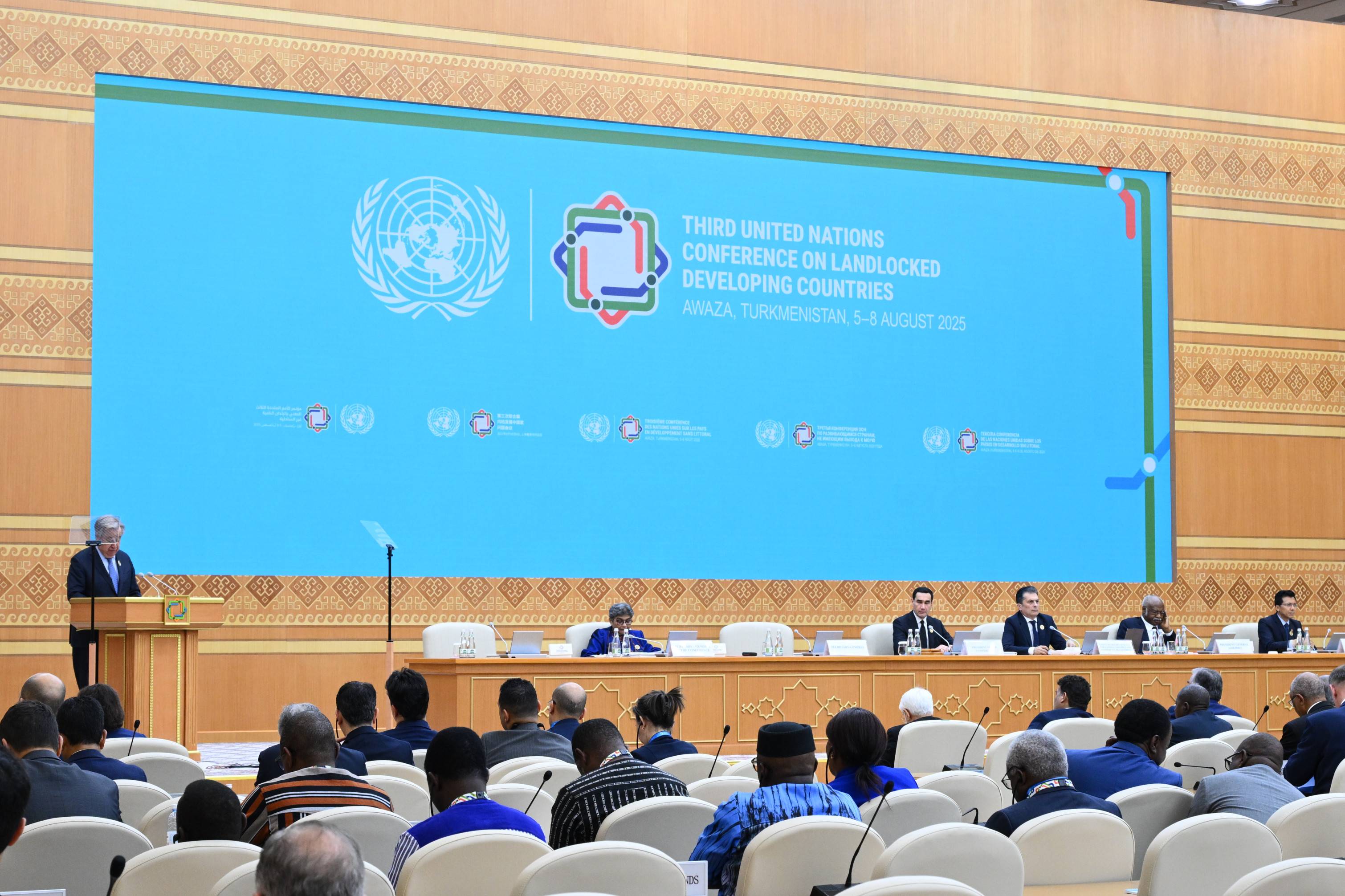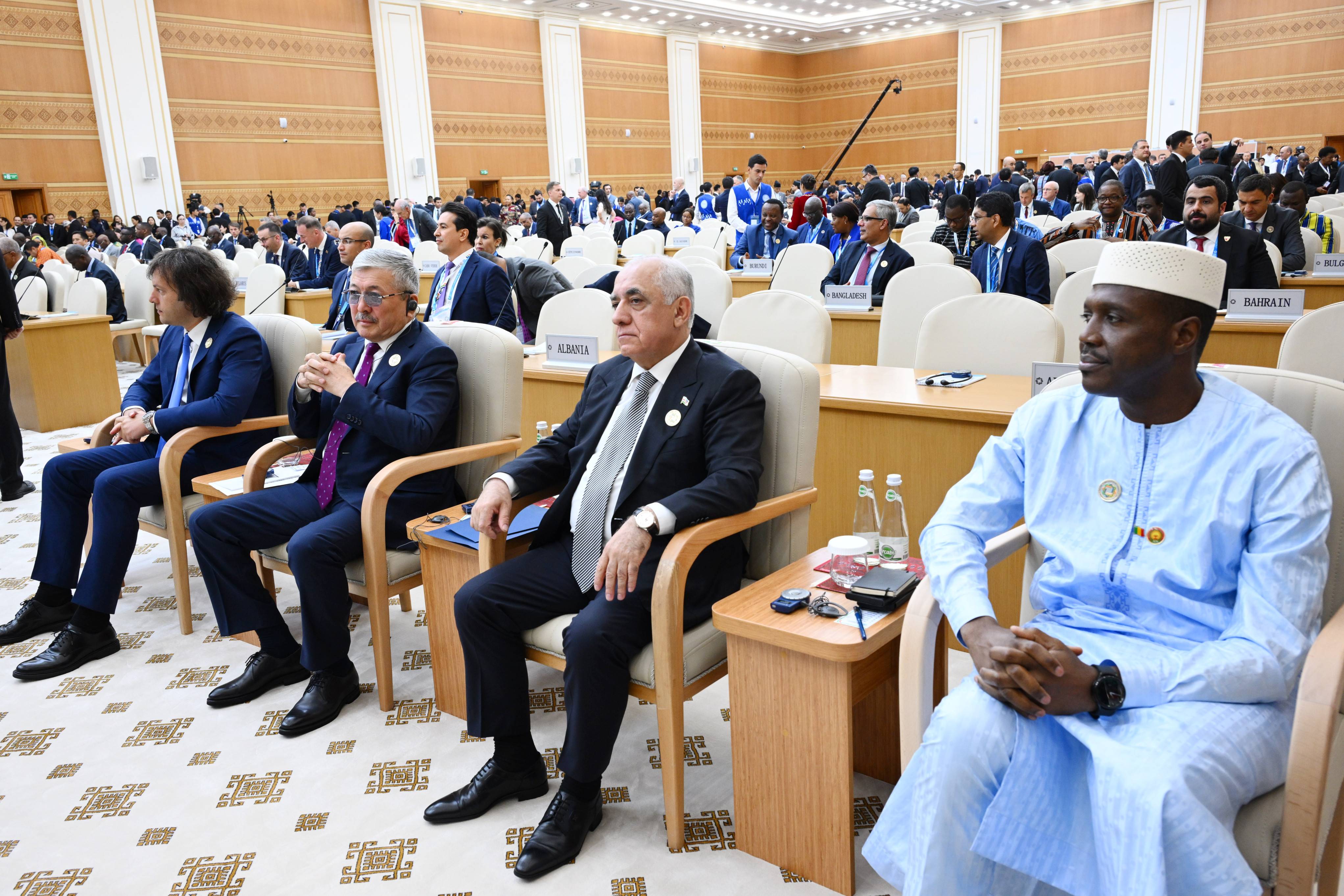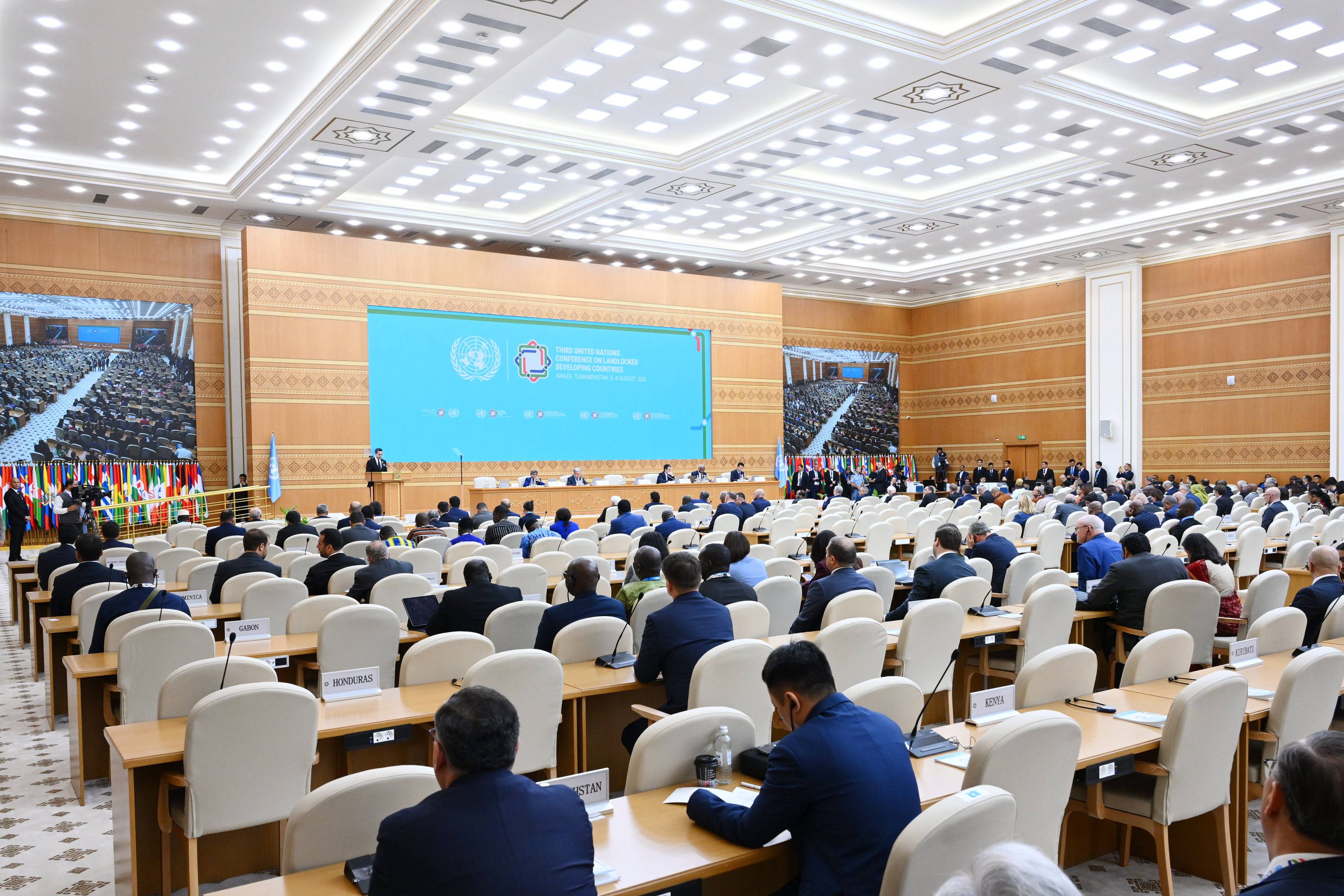
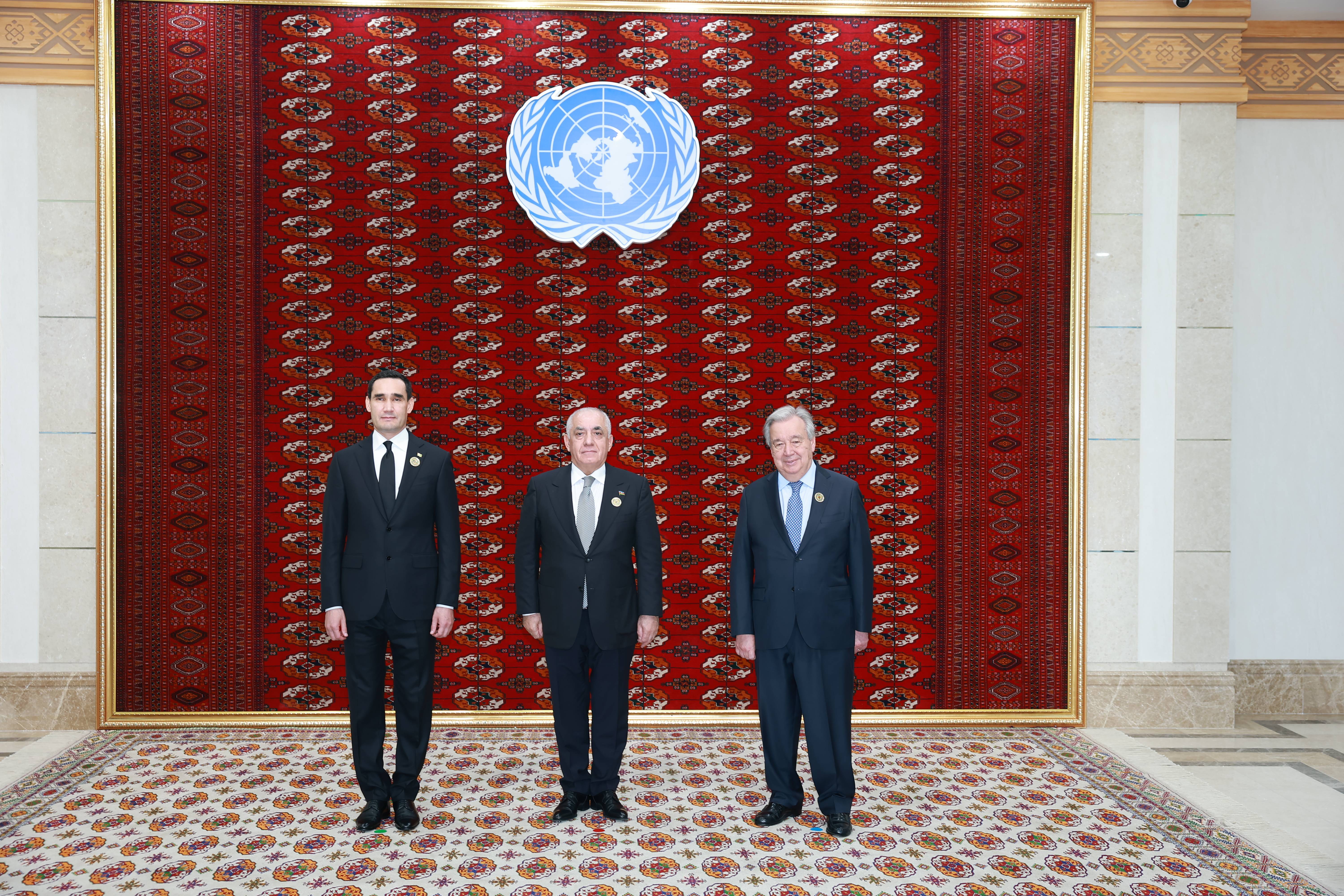
On August 5, the Third United Nations Conference on Landlocked Developing Countries was held in the “Avaza” National Tourism Zone in Turkmenbashi, Turkmenistan.
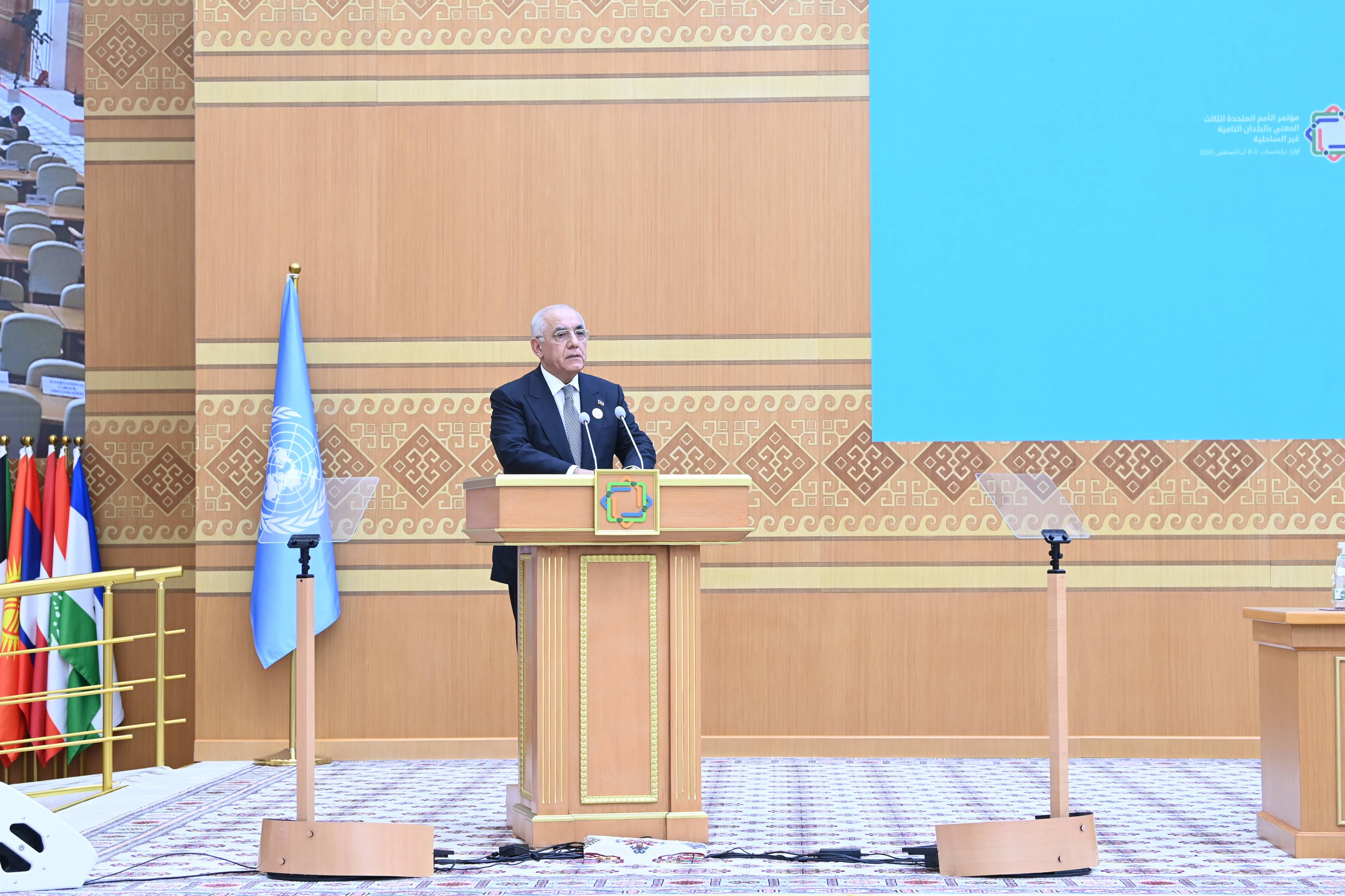
A delegation of Azerbaijan led by Prime Minister Ali Asadov participated in the conference’s plenary session.
Speaking at the session, the Prime Minister conveyed greetings on behalf of President of the Republic of Azerbaijan Ilham Aliyev to UN Secretary-General António Guterres, President of Turkmenistan Serdar Berdimuhamedov, and other heads of state and government attending the event.
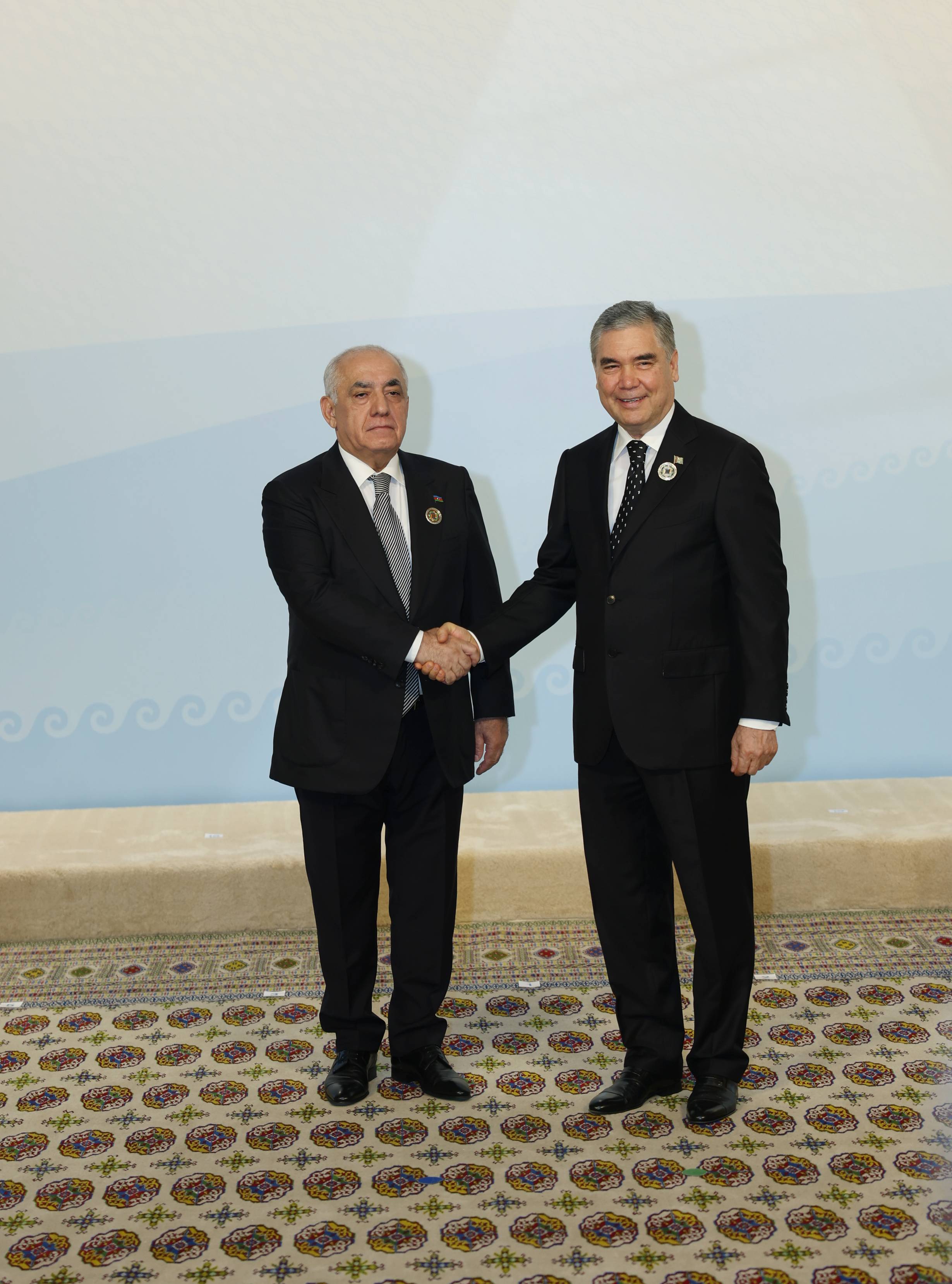
Addressing Azerbaijan-Turkmenistan relations, Ali Asadov noted that these relations are based on a shared heritage, history, and mutual respect. He highlighted the significance of the recent visit of Gurbanguly Berdimuhamedov, Chairman of the Halk Maslakhaty of Turkmenistan, to Azerbaijan, emphasizing that the visit created new opportunities for further strengthening bilateral strategic partnerships.
Despite its landlocked status, Azerbaijan has transformed geographical limitations into opportunities through its transport policies and modern infrastructure, the Prime Minister stated. He underscored Azerbaijan’s significant contributions to the East-West and North-South transport corridors.
“Azerbaijan’s largest commercial fleet in the Caspian Sea, with over 50 vessels, a shipbuilding yard currently producing 10 ships, the Baku International Sea Trade Port, set to reach a capacity of 25 million tons annually in the coming years, the Baku-Tbilisi-Kars railway, nine international airports, the region’s largest air cargo company, and many other factors have turned Azerbaijan into a key international transport hub,” Ali Asadov remarked.
Highlighting the importance of the Middle Corridor, the Prime Minister noted that container block trains from several Chinese cities reach Baku in 10-12 days, underscoring the corridor’s significance as a vital trade route.
The importance of cooperation within the framework of the UN Special Programme for the Economies of Central Asia (SPECA) was also emphasized.
On digital connectivity, Ali Asadov highlighted the great potential for cooperation, noting that Azerbaijan is advancing digital transformation initiatives through large-scale projects like the “Digital Silk Road.”
Joint efforts to enhance climate resilience were commended. Informing the conference participants about Azerbaijan’s hosting of COP29 last year, the Prime Minister noted that despite having less than a year for preparations, successful outcomes were achieved, and historic decisions on climate action were adopted.
Addressing environmental challenges in the Caspian Sea, Ali Asadov identified the declining water level as a major concern. He stressed the importance of unified efforts among Caspian littoral states to address this common issue.
He noted that during the 6th Summit of the Heads of Caspian Littoral States in Ashgabat in 2022, President Ilham Aliyev drew special attention to this ecological issue. Based on the Azerbaijani President’s proposal, steps have been taken to establish expert groups to study the causes of the Caspian Sea’s shallowing and to prevent further decline.
In conclusion, the Prime Minister emphasized the need to leverage all opportunities to empower landlocked developing countries, integrate their regions, and foster partnerships for a more prosperous world. He expressed Azerbaijan’s readiness to contribute its experience, resources, and goodwill to this cause.